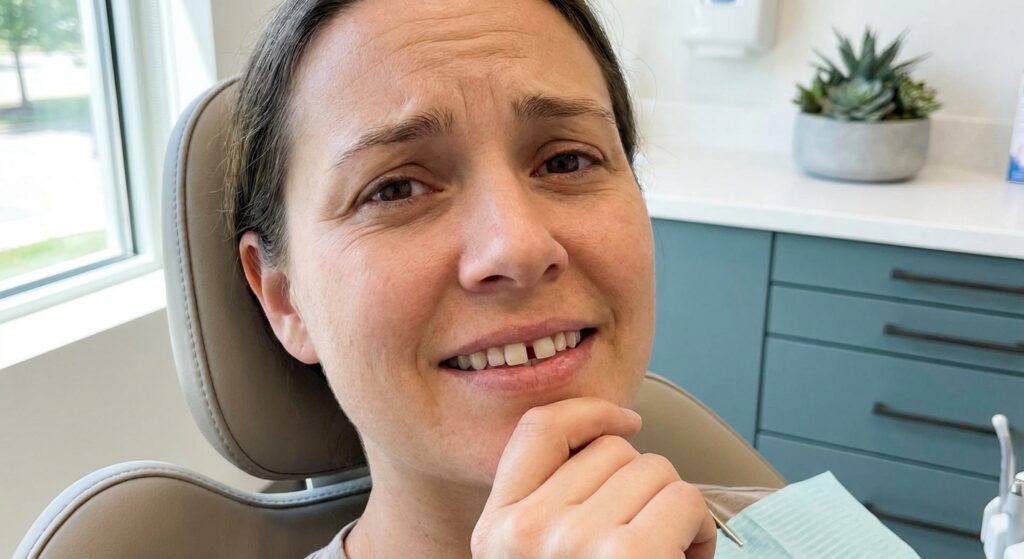
You’ve already decided the tooth has to be replaced. The gap shows when you smile, chewing on that side hurts, or your dentist warned you that the neighboring teeth are starting to drift. Then you looked up implant prices and felt your stomach drop. Now you’re wondering if there’s a smarter way to fill the space without spending thousands, and whether “cheaper” actually saves money or just pushes the bill down the road. So, is there a cheaper alternative to dental implants? Yes, there are several real options at Tidelands Dental, and each comes with trade-offs that rarely show up on the first price quote.
Talking about money at the dentist can feel awkward, and you’re not the only one who feels that way. Researchers who interviewed dentists about offering implant treatment found that bringing up a high-cost option is a delicate conversation for the dentist too. At Tidelands Dentistry in Surfside Beach, we keep that conversation judgment-free. Many of the patients we see from Surfside Beach, Socastee, Forestbrook, Garden City, and Myrtle Beach come in nervous about both the chair and the bill. Your budget is part of your treatment plan, and it is never something to be embarrassed about.
This guide covers what an implant may cost, the lower-cost options, what each one may cost over 10 and 20 years, and how to make the choice that fits both your mouth and your wallet.
What Does a Single Dental Implant Cost in the Surfside Beach Area?
Walk into our Tidelands Dental office asking about an implant, and we’ll give you a complete breakdown before you commit to anything. Grand Strand patients typically receive quotes that cover three parts, the post, the abutment, and the crown, plus any extra procedures like a bone graft that your specific case may need.
Many people are surprised to learn that an implant isn’t one item. It’s a small system built in stages, and each stage has its own cost. Here is how a typical total breaks down:
| Component | What It Does | What to Expect |
|---|---|---|
| Implant post | A small titanium screw placed in the jawbone that acts as the new tooth root | The foundation that integrates with bone over 3 to 6 months |
| Abutment | The connector that attaches the post to the visible tooth | Custom-angled to match your bite |
| Crown | The custom, tooth-colored cap you see when you smile | Made to match your natural teeth in shape and shade |
| Exam and imaging | X-rays and scans used to check bone and plan placement | Cone beam CT when needed for precise placement |
When you compare quotes, ask whether a price covers all three parts or just the post. A low number that leaves out the abutment and crown isn’t really a low number.
What Extra Procedures Can Raise the Final Cost?
Your mouth may need some preparation before an implant can go in. These are the most common add-ons we see at Tidelands Dentistry:
- Tooth extraction: the cost depends on whether it’s a simple lift-and-remove or a surgical extraction that requires sectioning the tooth. A surgical extraction usually costs more than a simple one.
- Bone graft: you may need one if the jawbone has thinned after a tooth has been missing for a while, though individual anatomy varies. Healing can add several months. The graft material and whether it’s your own bone or donor material affect the final number.
- Sinus lift: this adds bone under the sinus so an upper back implant may have enough support in some people. It’s only needed for upper molars and premolars when sinus anatomy sits low.
- Temporary tooth: a flipper or temporary partial you wear while the implant heals so the gap doesn’t show.
- Sedation: the cost varies by type and length of treatment, so ask for it to be listed in your quote.
Not everyone needs these steps. A comprehensive exam at Tidelands Dental shows which ones, if any, apply to you before you commit to anything.
Before You Replace It: Can the Tooth Be Saved?
The least expensive tooth replacement is often no replacement at all. If your tooth is damaged but still in place, a root canal followed by a crown can sometimes keep it working for years, which avoids extraction, bone loss, and the cost of filling a gap. Tidelands Dentistry performs root canals and tooth-colored fillings, so if your exam shows the tooth may be saveable, we’ll tell you before you spend money planning for a replacement.
Is There a Cheaper Alternative to Dental Implants? Three Options That Cost Less Up Front
Yes. A traditional bridge, a removable partial denture, and a full denture all cost less than an implant on day one. Your Tidelands Dental quote depends on your specific needs, how many teeth you’re replacing, and the materials used.
The ADA’s consumer site, MouthHealthy, covers bridges, dentures, and implants as the main ways to replace missing teeth. Here is how each lower-cost option works in plain terms.
A traditional bridge fills one gap by using the teeth on either side as anchors. Your dentist reshapes those two neighboring teeth and covers them with crowns. A false tooth is attached between the crowns, and the whole piece is cemented in place. It doesn’t come out, and it looks and feels like a natural row of teeth. A typical three-unit bridge replaces one missing tooth with two anchor crowns.
A removable partial denture replaces one or more missing teeth on a frame that clips onto your remaining teeth with small clasps. You take it out to clean it and to sleep. Partials have the lowest upfront price of any tooth replacement. They may be useful when you’re missing several teeth in different spots.
A full denture replaces every tooth in the upper or lower arch. It rests on your gums and is held by suction, a snug fit, or adhesive.
Tidelands Dentistry provides general, preventive, cosmetic, and restorative dentistry under one roof, so your exam, X-rays, and the conversation about your options happen in one place instead of across several offices. We accept Blue Cross Blue Shield and welcome cash-pay patients. If you have BCBS, we check what your plan allows before you commit to anything.
What Do You Give Up When You Choose the Cheaper Option?
You may give up lifespan and bone protection in some cases. Bridges often last 10 to 15 years in many people and require reshaping two healthy teeth, while dentures and partials sit on the gums as the jawbone underneath may slowly shrink.
Start with the bridge. To fit those anchor crowns, your dentist has to remove a layer of enamel from the teeth on both sides of the gap. If those teeth were healthy, that’s a permanent change made to support a tooth that’s no longer there. The anchor teeth also carry the chewing load for three teeth instead of one. The edges where the crowns meet the gumline can collect plaque, and cleaning under the false tooth takes a floss threader or water flosser. When decay or a crack hits an anchor tooth, the whole bridge may be affected.
That leads to the risk most people don’t hear about. If one anchor tooth fails, the bridge usually has to come off, and you may then be dealing with the original gap plus one or two damaged teeth. A one-tooth problem can turn into a three-tooth problem, and replacing three spaces costs far more than replacing one. Regular preventive visits can help catch decay at the crown edges early, while it’s still a small fix.
Partial dentures bring a different trade-off. The metal clasps press on the teeth they hook onto every time you chew. Meanwhile, the bone under the denture base may slowly change shape in some people, so the fit can loosen. Many partials need relines along the way and may need a full remake about every 5 to 8 years, though individual wear varies.
The bone issue applies to every option except one. When a tooth root is gone, the jawbone in that spot no longer gets the pressure that keeps it strong, so it may gradually shrink in many people. An implant post sits inside the bone and takes chewing pressure much like a natural root does, which may help preserve the bone around it in some patients. Bridges and dentures sit on top of the gums, so the bone below may continue to thin in some people, and over the years that can shift your bite and change how your lower face looks.
Which Option May Cost Less Over 10 and 20 Years?
Over 20 years, a single implant may cost about the same as a bridge or partial denture, and sometimes less, in some patients. That’s because the lower-cost options may need relines, remakes, or full replacement along the way, though your own numbers depend on your mouth, your plan, and how well each restoration holds up.
Here’s what we’ve seen play out in real patient timelines at Tidelands Dentistry:
| Option | Year 1 Cost | 10-Year Pattern | 20-Year Pattern |
|---|---|---|---|
| Single implant | The full system placed and restored | Routine cleanings only in most cases | The crown may eventually wear and need replacing in some patients |
| Traditional three-unit bridge | The bridge placed and cemented | Routine cleanings, possible margin repair | Replacement may be needed around year 12 to 15 in many cases, turning one procedure into two |
| Removable partial denture | Initial partial fabricated and fitted | One remake plus 3 to 5 relines as jaw changes in some patients | Two to three remakes plus 6 to 10 relines in some patients |
A few notes keep these patterns honest. They leave out routine cleanings and exams, which you need no matter which option you pick. They also assume the bridge numbers when the anchor teeth stay healthy, and if an anchor fails, the 20-year cost can climb well past what you’d expect.
Picture it this way. Say you choose a bridge at age 50 because it may save you money compared with an implant. If that bridge needs replacing at 63, you may have spent more on the same gap than the implant would have cost, and that’s before counting any damage to the anchor teeth. The cheaper choice in year one can become the more expensive choice by year fifteen in some patients.
Researchers study this same question. A published economic evaluation of implant-supported prostheses weighed the higher upfront cost of implant treatment against what it may deliver over time. That’s the same trade-off you’re weighing at your kitchen table, and it’s a good reminder that the sticker price is only the first line of the bill.
When Is a Bridge or Denture the Smarter Choice?
A bridge or denture may be the smarter choice when your bone, health, timeline, or pattern of missing teeth makes an implant impractical, not just when it costs less up front. There are good reasons to pick the lower-cost option, and choosing one isn’t settling.
Bone is the first factor. An implant needs enough healthy jawbone to hold the post. If a tooth has been missing for years, the bone may have thinned enough that you’d need a bone graft first, which adds cost and several months of healing. For some patients, that extra cost and time tips the balance toward a bridge or partial.
Your stage of life matters too. If you’re in your late 70s or beyond, or you’re managing health conditions that may make surgery harder, a faster and less involved option may fit your priorities better. A restoration that serves you well for the next 10 years can be exactly the right call.
The pattern of your missing teeth counts as well. If you’re missing three or four teeth scattered around your mouth, placing an implant for each one can far exceed most budgets, while a single partial denture may replace all of them at once for a fraction of the cost.
Sometimes a bridge’s biggest downside disappears. If the teeth on both sides of the gap already have large fillings or cracks and need crowns anyway, reshaping them for a bridge costs you very little extra in healthy tooth structure.
This is why the choice should come from a comprehensive dental exam, not a price search. You might be worried the visit itself will be uncomfortable, and that’s a fair worry, especially if it’s been a while since your last checkup. At Tidelands Dentistry, comfort and convenience come first. We take X-rays to look at your bone, check the health of your neighboring teeth, and talk through what matters most to you at your own pace. We treat patients like family, which means you’ll get honest, judgment-free guidance on every option, including the less expensive ones and the option of saving the tooth you have.
How Can You Afford an Implant Without Settling for the Wrong Option?
Spread the cost out over time. Combining your insurance benefits, smart timing, and a payment option may bring an implant’s monthly cost close to what you’d pay for a cheaper restoration.
Does Dental Insurance Cover Dental Implants?
Sometimes, but rarely in full. Many dental plans list implants as a major service and pay a portion, often after a waiting period. Some plans exclude implants entirely, and others cover only certain parts, such as the crown. Some policies also include an “alternate benefit” clause, which means the plan pays what it would have paid for a less expensive option, like a bridge, and you cover the difference.
Every plan also has a yearly maximum, the most it will pay in one benefit year. That cap is often low compared with the cost of an implant, which is why timing matters. An implant naturally happens in stages: the post goes in first, then the bone needs months to heal before the crown is placed. If those stages fall in different benefit years, your plan’s yearly maximum may apply to each year, so you can use your benefits twice instead of once in some cases.
Coverage varies a lot from one plan to the next, so we look at yours rather than guess. Tidelands Dentistry accepts Blue Cross Blue Shield, and we can review your specific benefits so you know what your plan may contribute before treatment starts.
What Payment Options Can Help?
Here are the most common ways Tidelands Dental patients cover the cost of tooth replacement:
- Blue Cross Blue Shield benefits: we at Tidelands Dental accept BCBS and can check what your plan may pay before you commit.
- Cash pay: we welcome patients without insurance and will give you a clear price up front.
- Third-party healthcare financing: many healthcare lenders offer promotional periods with no interest if you pay the full balance within the promotional window. Terms and approval vary by lender, and interest can apply if the balance isn’t paid off in time, so read the fine print.
- HSA or FSA funds: if you have a health savings account or flexible spending account, you may be able to use those pre-tax dollars for dental treatment.
- Staged treatment: spacing the stages of treatment across two benefit years can help you use your yearly maximum twice in some cases.
Keep the bigger picture in mind. Choosing a bridge only to save money now may cost more later if the anchor teeth fail. If an implant is the right fit for your mouth and the only obstacle is cash flow, a payment plan and smart timing may be better tools than a cheaper restoration you may regret.
Missing Most of Your Teeth? Implant-Supported Options Change the Math
Full mouth implant options like All-on-4 and All-on-X involve anchoring a complete arch of teeth to posts in the bone, and your treatment plan depends on how many implants you need, whether extractions or grafting come first, and the material used for the final teeth. A conventional full denture rests on your gums and comes with a much lower starting price, but that price gap comes with a big gap in stability and bone protection.
A conventional full denture rests on your gums. As the bone beneath shrinks in some patients, the denture may loosen, and that’s when the slipping, clicking, sore spots, and trips to buy adhesive can begin. Many full dentures need relines and adjustments over the years and may eventually need a full replacement as your jaw changes. Many people with dentures also start avoiding foods like steak, raw vegetables, or apples because biting down can feel risky.
Implant-supported options may help address the slipping problem by anchoring teeth to posts in the bone. An implant-retained overdenture snaps onto a few implants, so it still comes out for cleaning but stays put while you eat and talk. An All-on-4 or All-on-X restoration goes a step further: a full arch of teeth is fixed onto four or more implants and stays in your mouth. Because the implants sit in the jawbone, they may help preserve the bone that a regular denture slowly lets go in some patients. The final price depends on the number of implants, the material of the teeth, and whether you need extractions or bone grafting first.
The upfront difference is real, and we won’t pretend it isn’t. For many people, though, teeth that stay in place and let them eat without worry are worth weighing seriously against years of relines and replacements.
At your Tidelands Dental exam, we can talk through your situation and what a full-arch approach would involve. For a broader look at every tooth replacement option, read our guide to dental prosthetics for Myrtle Beach area patients.
The Questions You’re Probably Still Asking
Here are short, direct answers to the questions Surfside Beach patients most often ask Tidelands Dental about lower-cost ways to replace missing teeth.
Is there a cheaper alternative to dental implants that still looks natural?
Yes. A traditional bridge with tooth-colored crowns looks and feels much like a natural row of teeth and costs less up front. Its main drawbacks may include a shorter lifespan in many patients and the need to reshape the neighboring teeth.
What is the cheapest way to replace a missing tooth?
A removable partial denture has the lowest upfront cost. It needs regular adjustments and may need a remake every 5 to 8 years as your jaw changes shape in some patients. If the tooth isn’t lost yet, ask whether a root canal can save it first.
How long does a dental bridge last compared to an implant?
A traditional bridge often lasts 10 to 15 years in many patients before it may need replacing. A dental implant can last decades with good care in some people and may help prevent the bone loss that can shorten a bridge’s life.
Do dental implants prevent bone loss better than dentures?
In many patients, yes. Implants take chewing pressure inside the jawbone much like natural roots do. Dentures and bridges sit on top of the gums, so bone can keep shrinking underneath them.
Can I use insurance and financing together to afford an implant?
In many cases, yes. You may be able to use your dental benefits for part of the cost and finance the balance, and staging treatment across two benefit years can help you use your yearly maximum twice in some situations. Tidelands Dentistry accepts Blue Cross Blue Shield and can review your plan with you.
What happens if I choose a bridge and the supporting teeth fail later?
The bridge usually has to come off. You may then need to replace the original gap plus one or both anchor teeth, which turns a one-tooth problem into a larger and more expensive restoration.
Are there cheaper implant options like mini implants?
Mini implants cost less, but they’re narrower and may be less stable. They often aren’t a good fit for the chewing pressure a single back tooth takes in some patients, so they’re most often used to help hold a lower denture in place.
Get a Clear, Side-by-Side Price Before You Decide
You don’t have to figure this out from price charts alone. Schedule a comprehensive dental exam at Tidelands Dentistry in Surfside Beach, SC, an easy drive from Socastee, Forestbrook, Garden City, and Myrtle Beach. We’ll check whether your tooth can be saved, review your bone health and your Blue Cross Blue Shield benefits or cash-pay options, and walk through the possible long-term cost of every replacement option. Then we’ll help you choose what works for your smile and your budget, without judgment, with the comfort and convenience of having your care under one roof, and with the kind of attention we’d give our own family.
Here’s one thing to do before your Tidelands Dental visit: bring your insurance card and ask us to compare the implant and the bridge or partial side by side over 20 years, not just today. That single comparison usually makes the right choice much clearer.
Find the Right Solution for Your Smile
If you’re weighing the cost of tooth replacement against what matters most to you long-term, we understand that decision deserves a real conversation. Tidelands Dental welcomes patients in Surfside Beach, SC who want to explore all their options without pressure, so you can move forward with confidence about what will work for your budget and your life.
- Costs shown are typical published national ranges and illustrative estimates, not quotes.
- Your actual cost depends on your exam, your treatment needs, and your plan.
- Insurance coverage varies by plan and is not guaranteed.
- Financing is offered by third-party lenders, is subject to credit approval, and terms vary.
- Individual outcomes and treatment longevity vary; consult your dentist to understand what may apply in your specific case.