Understand extraction & implant combination
When you face the prospect of losing a tooth, the idea of undergoing two separate surgeries—one to extract the failing tooth and another to place an implant—can feel overwhelming. The extraction & implant combination procedure streamlines this process by removing the tooth and inserting the implant post in a single visit. In many cases, this approach reduces your overall treatment time, minimizes the number of surgical appointments, and helps you recover just once rather than twice.
Dental implants can be placed on the same day as tooth extraction, saving time and money by allowing patients to recover once instead of twice [1]. Clinics like Smart Arches offer same-day tooth extraction and implant procedures, enabling you to leave with a titanium post in place immediately after removal, along with a temporary restoration to protect the site [2].
Depending on your jawbone condition and the materials used, your surgeon may even combine minor bone grafting and implant placement in one appointment, potentially reducing the overall timeline of treatment [3]. This all-in-one approach demands precise planning and candidacy assessment, but for eligible patients, it delivers the convenience of fewer surgeries, a shorter timeline to a restored smile, and streamlined healing.
Embracing extraction & implant combination sets the stage for preserving bone volume, maintaining facial structure, and preventing the sunken look that often follows tooth loss. As you explore this option, understanding the criteria that make you a good candidate is the first step toward a successful outcome.
Evaluate your candidacy
Not every patient qualifies for same-day extraction and implant placement. Your oral health, medical history, and jawbone quality all play vital roles. A thorough assessment begins with imaging, typically using 3D cone beam scans to evaluate bone density, proximity to nerves, and sinus anatomy.
If your jawbone is not thick enough or too soft to support an implant, bone grafting is often required before or during implant placement to establish a solid foundation and prevent surgical failure [3]. In some cases, this grafting extends your treatment timeline by four to six months to allow proper healing and integration [4].
Medical factors such as uncontrolled diabetes, smoking, or immune disorders can affect healing and osseointegration—the process by which bone fuses to the implant. If you have gum disease or active infection around the tooth to be extracted, your provider may recommend treating that issue first before moving forward with implant placement.
In situations involving impacted wisdom teeth or complex root morphology, you may need a specialist skilled in advanced removal techniques. Connecting with a complex extractions dentist ensures the extraction stage proceeds smoothly, laying the groundwork for a stable implant.
Prepare for surgery
Once you and your dental team confirm that you are a suitable candidate, proper preparation makes a substantial difference in your comfort and recovery. You will receive detailed preoperative instructions, including:
• Scheduling any required imaging or lab work several weeks in advance
• Adhering to a clear-liquid diet the evening before surgery if you plan to use deeper sedation
• Stopping smoking at least a week before your procedure to optimize blood flow and healing
• Arranging a ride home if you choose IV or general sedation
Your surgeon may recommend a prescription antibiotic or a chlorhexidine mouth rinse to reduce bacterial load. If you have a history of heart valve issues or joint replacements, make sure to inform your provider, as antibiotic prophylaxis might be necessary.
On the day of surgery, arrive with a clean mouth—brush and floss as usual but avoid eating for the time period specified by your sedation plan. Wear comfortable clothing and leave jewelry and valuables at home. With these steps, you set the stage for a seamless extraction & implant combination experience.
Choose sedation options
Comfort during oral surgery is paramount. Depending on your anxiety level, medical history, and the complexity of your extraction & implant combination, your surgeon may offer one of several sedation routes. The table below highlights common options:
| Sedation type | Level | Benefits | More info |
|---|---|---|---|
| Nitrous oxide | Mild | Rapid onset, quick recovery, adjustable | Sleep dentistry and sedation |
| Oral sedation | Moderate | Deeper relaxation, simple pill form | sedation dental procedure myrtle beach |
| IV sedation | Moderate to deep | Precise control, fast onset, amnesic effect | iv sedation dental sc |
| General anesthesia | Deep (unconscious) | No awareness, complete comfort for lengthy procedures | sedation & sedation dentistry sc |
Your provider will review your medical history and tailor a sedation plan that keeps you comfortable while ensuring safety. For patients with severe dental anxiety, IV sedation often offers the best balance of relaxation and rapid adjustment, whereas nitrous oxide may suffice for those who need just a calming boost.
Step-by-step surgical process
Your extraction & implant combination journey unfolds in distinct stages. Below, we break down each phase so you know what to expect.
Extraction stage
First, the surgeon administers local anesthesia to numb the area around the failing tooth. If you have opted for IV sedation, you will already be in a deeply relaxed state. The tooth is then carefully removed, using techniques that preserve as much surrounding bone as possible. Gentle socket debridement clears any debris or infected tissue, creating a clean bed for the implant [5].
After extraction, the site is irrigated and inspected. If minor bone graft material is needed to preserve socket volume, it can be placed immediately or during a separate pre-implant grafting appointment, depending on your bone quality.
Implant placement
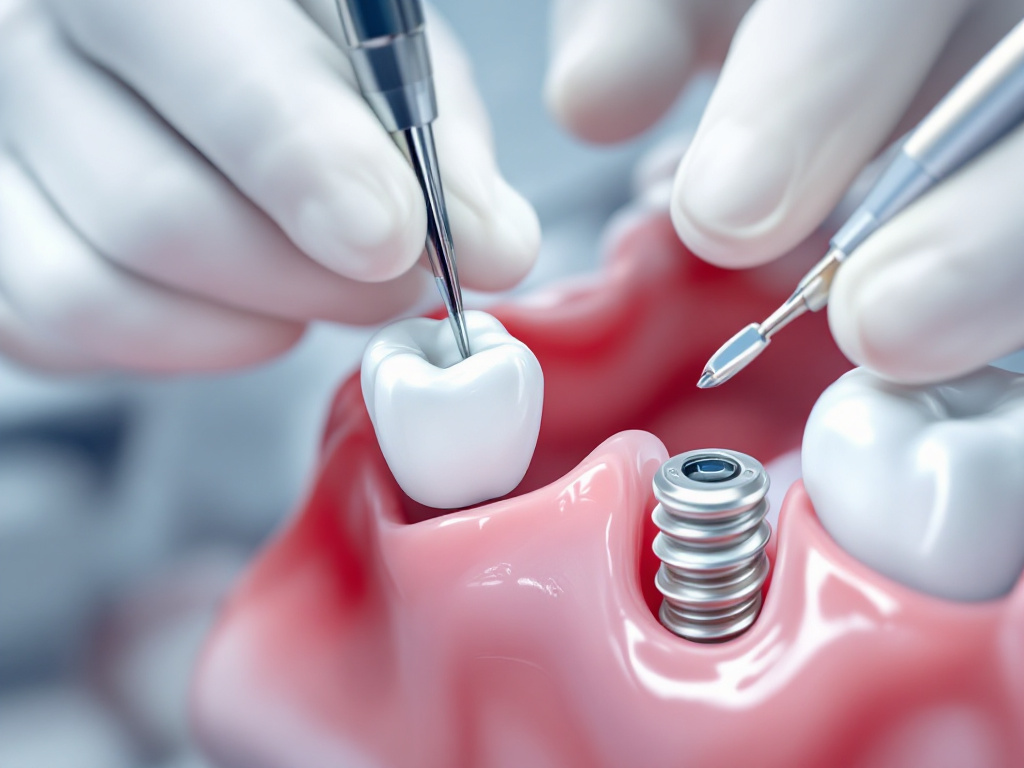
With the extraction socket prepared, the surgeon drills into the jawbone at a precise depth and angle determined by your preoperative imaging. A titanium implant post is inserted, acting as a replacement root. Your bone will begin to grow around the textured surface of the post in a process known as osseointegration. This phase typically takes three to six months, during which the implant achieves the stability needed to support a restoration [3].
Immediate implant placement preserves bone volume by stimulating the jawbone and preventing the collapse of the socket [6]. When conditions are ideal, this approach delivers both functional and aesthetic benefits right from day one.
Abutment and crown
Once osseointegration is confirmed via radiographic evaluation, a small second surgery attaches an abutment—a connector between the implant post and the final crown. In some protocols, the abutment is placed at the same time as the implant to eliminate a second minor surgery [3].
Your dentist then takes impressions or uses digital scanning to fabricate a custom crown, matching the color, shape, and bite of your natural teeth. The crown is seated securely on the abutment, completing your restoration.
Address bone graft requirements
A strong jawbone foundation is critical for long-term implant success. If imaging reveals insufficient bone height or width, your surgeon will recommend a grafting solution. Common graft materials include autologous bone (from your own body), donor bone, or synthetic substitutes.
Bone grafting typically requires a healing period of four to six months before proceeding with implant surgery [4]. In a combined procedure, minor grafting can sometimes occur alongside implant placement, shortening your overall timeline and reducing the number of healing phases.
For procedures involving the upper jaw near the sinus cavity, a sinus lift may be necessary to create additional vertical space. This technique elevates the sinus membrane and places bone graft material beneath it, ensuring you have adequate bone volume for implant anchorage. To explore local sinus lift options, consult our bone graft & sinus lift myrtle beach guide.
Support healing and integration
Your implant’s long-term stability hinges on meticulous aftercare during the osseointegration phase. Immediate postoperative instructions often include:
• Gentle rinsing with saltwater or an antimicrobial mouthwash to keep the site clean
• A soft-food diet that avoids pressure on the surgical area
• Avoiding smoking or vaping, which can impair blood flow and delay healing
• Taking prescribed antibiotics or anti-inflammatories as directed by your surgeon
Swelling and mild discomfort are normal in the first few days. Applying a cold compress intermittently can reduce inflammation. Attend all follow-up visits so your provider can monitor bone growth around the implant and identify any early signs of complications, such as peri-implantitis—an infection around the implant site caused by bacteria, poor hygiene, or systemic factors [7].
Maintaining excellent oral hygiene—brushing gently around the implant and cleaning interdental spaces with floss or an interdental brush—helps prevent plaque buildup and ensures the implant integrates fully with your jawbone.
Plan your restoration
Once your implant has successfully integrated, it becomes the foundation for your new tooth. Restoration options vary based on the number of missing teeth and your long-term goals:
Single-tooth crown: A custom porcelain crown mounted on an abutment replaces one missing tooth with natural form and function.
Implant-supported bridge: When you have two or more adjacent missing teeth, a bridge anchored to two implant posts restores multiple teeth without affecting neighboring teeth [8].
All-on-4 or full arch: If you require a complete upper or lower arch replacement, the All-on-4 implant system offers a fixed prosthesis supported by four strategically placed implants [9].
Your restoration plan considers bite alignment, aesthetic concerns, and long-term maintenance. A skilled implant restoration sc team will guide you through material choices—zirconia or porcelain—and ensure your prosthesis blends seamlessly with your natural smile.
Select your provider
Choosing a qualified team is as important as the procedure itself. Look for a provider who combines advanced surgical capabilities with expertise in implantology, sedation, and full-mouth solutions. Consider these factors:
Credentials and training: Board-certified oral surgeons, periodontists, and implant specialists bring a deep understanding of anatomy and implant biomechanics.
Technology and facilities: Practices equipped with 3D imaging, guided surgery tools, and in-house labs can deliver more precise, efficient care [10].
Sedation options: A clinic that offers multiple sedation levels—from nitrous oxide to IV sedation—ensures comfort any time anxiety arises [11].
Comprehensive services: If you need complex extractions, bone grafting, sinus lifts, and final restoration under one roof, you save time and enjoy consistent quality [12].
Location and convenience: Factor in travel time, parking, and appointment flexibility when choosing a practice near you. Practices like dental implants myrtle beach and implant dentist surfside beach offer both local expertise and patient-centric care.
By partnering with a team that prioritizes your comfort, communicates clearly, and employs cutting-edge techniques, you maximize the success of your extraction & implant combination and set yourself up for a lasting, healthy smile.
Ready to explore whether an extraction & implant combination is right for you? Schedule a consultation with our expert team today, and take the next step toward a streamlined, comfortable path to tooth replacement.
References
- (Affordable Dentures & Implants)
- (Smart Arches Dental)
- (Mayo Clinic)
- (AZ Max Oral Surgery)
- (NCBI PMC)
- (Advanced Dentistry)
- (Connecticut Periodontist)
- (implant supported bridges)
- (all-on-4 implant system sc, full mouth implant restoration)
- (implant surgery clinic, oral surgery dentist sc)
- (sedation for anxious patients dentist)
- (surgical dental services surfside, implant specialist myrtle beach)