Implant supported bridges overview
If you are missing one or more teeth, implant supported bridges could be the solution that restores both function and appearance in a way that feels natural and permanent. Implant supported bridges anchor a series of prosthetic teeth to dental implants surgically placed in your jawbone, avoiding the need to alter adjacent healthy teeth and delivering exceptional stability. These restorations not only fill gaps but also stimulate the underlying bone, preventing the bone loss that often follows tooth loss [1].
Implementing this approach requires careful planning, skilled surgical placement and precise restoration work. Yet the outcome is a bridge that can last decades with proper care, potentially transforming your ability to chew, speak and smile with confidence. Below is a quick comparison between implant supported and traditional bridges to help you understand how they differ in key areas:
| Feature | Implant-supported bridge | Traditional bridge |
|---|---|---|
| Support source | Anchored to implants in jawbone | Relies on adjacent natural teeth |
| Bone preservation | Stimulates bone, prevents resorption | No bone stimulation, potential bone loss |
| Effects on adjacent teeth | No alteration | Requires trimming of healthy teeth |
| Durability | 20+ years with care [2] | 5–15 years typical [3] |
| Stability & function | High, similar to natural teeth | Moderate, risk of dislodgement |
| Procedure length | Several months (healing needed) | Weeks |
| Cost | Higher initial investment | Lower upfront cost |
How implant bridges work
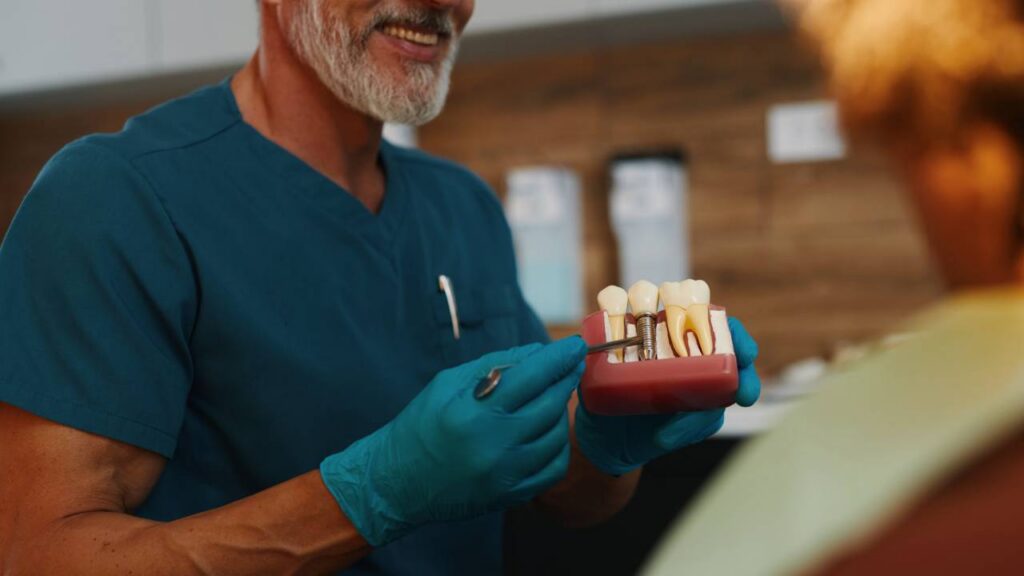
A successful implant supported bridge begins with surgically placing titanium implants into your jawbone. These implants act as artificial roots, providing a foundation strong enough to support multiple connected crowns. Under local anesthesia and optional sedation, your implant dentist evaluates bone density and precise angulation to ensure optimal stability [4]. This phase typically takes one to two office visits, depending on whether preparatory procedures are needed to reinforce the jawbone.
Implant placement and healing
Once the implants are positioned, your body begins a process called osseointegration, where the bone fuses to the implant surface. This fusion can take anywhere from three to six months, although individual healing times vary [4]. During this period, you may wear a temporary prosthesis to maintain aesthetics and function. Your oral surgeon or specialist will monitor healing closely, ensuring that the implants become firmly anchored before moving on to the final restoration.
If you require sedation to stay comfortable during surgery, options range from mild nitrous oxide to deeper IV sedation, and you can explore these at iv sedation dental sc.
Custom bridge insertion
After osseointegration is complete and your implants are stable, your dentist takes precise impressions to design a custom bridge that matches the color, shape and bite of your natural teeth. In a final appointment, the bridge is secured onto the abutments that connect to your implants. Modern materials such as porcelain fused to zirconia offer both durability and a lifelike appearance. At this point, if you require a full-arch solution, procedures like the all-on-4 implant system sc can streamline treatment by using fewer implants to support an entire dental arch.
Candidacy for implant bridges
Not everyone is immediately ready for implant supported bridges, but many patients become ideal candidates once certain conditions are met. You should have good overall health, including controlled chronic conditions such as diabetes, so that your body can heal properly after surgery [5]. Healthy gums free from active periodontal disease are essential to prevent infections that could compromise your implants. Sufficient jawbone volume and density are also critical; if you have experienced bone loss, your dental team may recommend bone grafting or a sinus lift to build a stable foundation. You can learn more about these services at bone graft & sinus lift myrtle beach.
Commitment to excellent oral hygiene and regular dental visits plays a key role in the long-term success of your restoration. Your implant specialist will review your medical history, perform imaging scans and discuss any aesthetic or functional goals you have in mind. If you require sedation to stay comfortable during surgery, options range from mild nitrous oxide to deeper IV sedation.
In certain situations, immediate implant placement following tooth extraction may be possible, reducing the overall treatment timeline. For complex extractions that need to be combined with implant placement, ask your dentist about protocols for sequential extraction and implantation. Working closely with a qualified oral surgery dentist sc helps ensure that you follow the most efficient pathway toward a stable, lasting restoration.
Benefits of implant bridges
Choosing implant supported bridges delivers advantages that extend beyond filling the gap left by missing teeth. Implants function like natural tooth roots, transmitting chewing forces into the jawbone and preserving bone mass to help maintain your facial structure [1]. This root-level support gives enhanced stability, so you can chew firmly without fear of slipping. Unlike traditional bridges, implant restorations avoid trimming healthy adjacent teeth, preserving your natural structure [2].
In addition to functional gains, these bridges offer a lifelike appearance through custom shading and high-quality materials that blend seamlessly with your smile. Secure fixation also improves speech clarity, since the bridge remains firmly in place during talking or eating. With consistent care, implant supported bridges can last 20 years or longer, making them a cost-effective choice over time despite a higher initial investment [3]. Many patients report renewed confidence and comfort, enjoying daily activities without concerns about bridge movement or discomfort.
Drawbacks and considerations
While implant supported bridges offer many benefits, you should also weigh potential drawbacks. One main consideration is cost. Dental implants involve surgical fees, laboratory work for custom restorations and possible preparatory procedures such as bone grafting. Although many insurance plans cover part of the cost when deemed medically necessary, you should verify coverage details and out-of-pocket estimates with your provider [3].
Another factor is treatment timeline. Osseointegration demands patience, with healing times ranging from three to six months before you receive the final bridge. In cases where immediate loading is not recommended, you may wear a temporary appliance, which can be less comfortable or require dietary adjustments in the interim. Surgical placement of implants requires adequate jawbone density and healthy gums; if your bone level is insufficient, grafting or a sinus lift will extend the timeline. In rare cases, implants may fail to integrate, necessitating removal and potential re-placement after further healing.
Maintaining realistic expectations about long-term care is also crucial. Even with superior durability, implant supported bridges require daily hygiene diligence and regular check-ups to prevent conditions like peri-implantitis from affecting implant stability. By understanding these considerations upfront, you can plan your budget, timeline and care routine more effectively.
Caring for your bridge
Ensuring the longevity of your implant supported bridge hinges on a consistent oral hygiene routine and professional maintenance. Begin by brushing twice daily with a soft-bristled toothbrush, paying close attention to the interface between the bridge and your gums. Use floss threaders or interdental brushes to clean beneath each pontic where food can collect. If you are unsure about technique, consult your hygienist for personal guidance.
Regular dental check-ups every six months are crucial. During these visits, your dentist will assess the health of your implants, surrounding tissues and the condition of the restoration, removing any tartar buildup that your daily routine may miss. Early detection of issues like gum recession, loose abutments or implant mobility can often be managed with minimally invasive interventions [6].
During the first 12 months after restoration, avoid hard or sticky foods that could stress the bridge or compromise the implant seal. Over time, you can reintroduce most foods, but remain cautious with items like sticky candy or ice crunching. Maintaining a balanced diet rich in calcium and vitamins helps support bone health around your implants. With proper care, your implant supported bridge can remain functional and aesthetically pleasing for decades [7].
Choosing your provider
Selecting the right dental team for your implant supported bridge is as important as choosing the treatment itself. Seek a practice that offers comprehensive surgical capabilities and in-house laboratory support, ensuring your implants and restorations are coordinated seamlessly. Specialists with advanced training in implant placement and oral surgery, whether periodontists or board-certified oral surgeons, bring the expertise required for complex cases.
Look for providers who use digital imaging and guided surgery protocols to optimize implant positioning. Confirm that sedation protocols align with your comfort needs and that staff are experienced in administering them. Transparent pricing, financing options and assistance with insurance claims make budgeting simpler, especially since implant supported bridges represent a higher initial investment than conventional approaches. Before making a decision, review before-and-after galleries and patient testimonials to understand real-world results; practices may showcase these under sections like implant dentist surfside beach.
If you require a full-arch solution, ask about options like full mouth implant restoration. A multidisciplinary team, including restorative dentists, lab technicians and surgical specialists, fosters a collaborative environment where your unique needs and goals guide every step.
Assess next steps
Choosing implant supported bridges can be life-changing, offering stability, bone preservation and a natural restore of form and function. As you consider whether this solution aligns with your needs, schedule a consultation with a qualified implant specialist to review your medical history, explore sedation options and develop a personalized treatment roadmap. With proper planning, expert care and diligent maintenance, you can enjoy the confidence of a complete smile that stands the test of time.