About 47% of American adults over 30 have some form of periodontal disease, according to the CDC. If your dentist has recommended a deep cleaning, you are already ahead of the many people who delay treatment. Here is exactly what to expect, from the first appointment to the four-week follow-up.
What Is a Deep Cleaning for Gum Disease?
A deep cleaning is not a more thorough version of your twice-yearly checkup. It is a distinct clinical procedure, formally called scaling and root planing, designed to treat active gum disease by removing bacterial deposits that have accumulated below the gumline where standard instruments cannot reach.
How Deep Cleaning Differs from a Standard Cleaning
A routine cleaning addresses the surfaces of your teeth above the gumline, a zone dentists call supragingival. A deep cleaning goes subgingival, meaning the instruments travel beneath the gum tissue into the periodontal pocket where disease-causing bacteria have colonized. No amount of regular cleaning frequency closes that gap. The two procedures treat fundamentally different anatomical zones.
Why Gum Disease Requires This Specific Treatment
A 2021 systematic review published in the Journal of Clinical Periodontology, analyzing data from over 6,700 patients, confirmed that scaling and root planing reduces pocket depth by an average of 1.29mm in moderate periodontitis and significantly lowers the bacterial load driving bone loss. The mechanism is direct: bacteria embedded in calcified tartar below the gumline trigger a chronic immune response that destroys the bone and ligament holding your teeth in place. Removing that deposit stops the trigger. Understanding how gum disease progresses from early warning signs to advanced bone loss puts this treatment in its proper context.
Step 1: Recognize the Signs That You Need a Deep Cleaning
The American Academy of Periodontology reports that gum disease is frequently painless in its early and middle stages, which is why many patients are genuinely surprised when a dentist recommends treatment. Pain is not the signal. Bleeding gums on brushing, persistent bad breath that does not resolve with brushing, and visible pulling away of the gumline from the tooth are the consistent indicators.
What a Periodontal Probe Reading Means for You
During your exam, the dentist or hygienist uses a thin calibrated instrument called a periodontal probe to measure the depth of the space between your gum and tooth at six points per tooth. A healthy reading is 1 to 3 millimeters. Readings of 4mm indicate early disease and close monitoring. Readings of 5mm or greater, particularly with bleeding on probing, signal active periodontitis that a standard cleaning cannot resolve. Understanding what your dentist is actually measuring during that exam helps you interpret your own chart numbers with clarity.
Risk Factors That Accelerate the Need for Treatment
Smoking is the single most significant behavioral risk factor: a 2020 meta-analysis in the Journal of Periodontology found smokers are 2.8 times more likely to develop severe periodontitis than non-smokers. Diabetes impairs the immune response to bacterial infection and accelerates bone loss, particularly when blood sugar is poorly controlled. Certain medications, including antihistamines, antidepressants, and blood pressure drugs, reduce saliva flow and remove a key natural defense against bacterial buildup. If any of these apply to your situation, earlier intervention is the right call, not a reason to delay.
Step 2: Prepare for Your Appointment
The most useful thing you can do before your deep cleaning is give your dental team complete information. What happens in the chair depends partly on what you disclose before you sit down.
What to Tell Your Dental Team Beforehand
Blood thinners, including aspirin therapy, warfarin, and newer anticoagulants, affect bleeding during and after the procedure and require coordination with your prescribing physician in some cases. A history of heart valve conditions, joint replacements, or infective endocarditis changes the pre-treatment protocol. Diabetes affects healing time and how closely your recovery is monitored. Dental anxiety is equally worth disclosing: sedation options, including nitrous oxide and oral sedation, are available and change how the appointment is structured. None of these disclosures will result in the treatment being refused. They exist so the procedure can be done safely and comfortably.
How to Plan Your Day Around the Visit
Deep cleanings are typically split into two appointments, treating one side of the mouth per visit. Each appointment runs 60 to 90 minutes. If you are using sedation, arrange a driver and plan to rest for the remainder of the day. Even without sedation, the numbing takes several hours to wear off fully, so plan soft meals for that evening and avoid scheduling demanding work commitments immediately after.
Step 3: Understand What Happens During the Procedure
Nothing that happens during scaling and root planing should catch you off guard. The sequence is predictable and the sensations, once anesthesia is effective, are pressure and vibration rather than sharp pain.
The Numbing and Anesthesia Phase
Local anesthesia is injected directly into the gum tissue around the teeth being treated. The injection itself is the most uncomfortable moment for most patients. Once the anesthesia takes effect, typically within five minutes, the tissue is numb and you will feel instrument pressure without pain. Patients with significant dental anxiety often find that adding nitrous oxide on top of local anesthetic makes the entire appointment manageable.
Scaling: Removing Tartar Below the Gumline
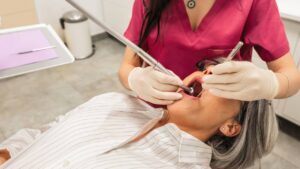
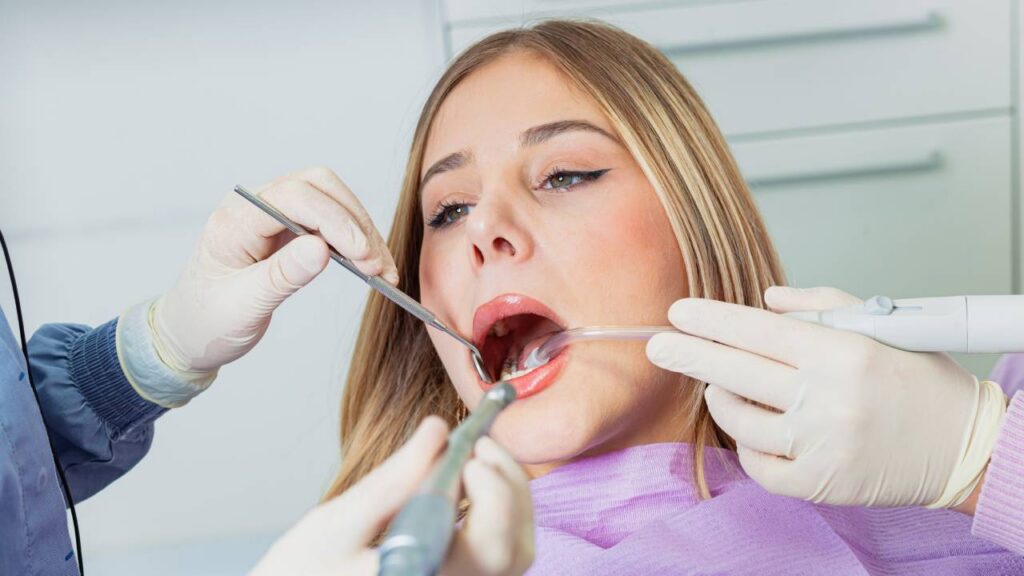
Scaling removes the hardened tartar deposits attached to the tooth root beneath the gumline. Your hygienist uses two types of instruments: an ultrasonic scaler, which vibrates at high frequency to break apart calculus while spraying a water coolant, and hand instruments called curettes, which are used for precise removal in deeper pockets. The water spray and suction are constant. You hear and feel movement but, with effective anesthesia, not pain.
Root Planing: Smoothing the Tooth Root
Once the deposits are cleared, the root surface itself is smoothed. This matters because bacterial toxins penetrate the surface of the root and because a rough surface gives bacteria easier purchase for recolonization. The curette pressure during this phase is more sustained than during scaling. Smooth root surfaces allow the gum tissue to reattach to the tooth rather than remaining detached and vulnerable to reinfection.
Step 4: Know What to Expect Immediately After the Appointment
The first 48 hours after a deep cleaning are the most uncomfortable part of recovery. Knowing what is normal removes the guesswork.
Normal Symptoms in the First 48 Hours
Gum tenderness, tooth sensitivity to cold and heat, and mild swelling are all expected responses. Some minor bleeding when you brush or rinse in the first day is normal. These symptoms confirm that the tissue is responding to treatment, not that something went wrong. The soreness typically peaks around 24 hours and diminishes steadily from there.
Pain Management That Actually Works
A 2019 clinical review in Dental Hypotheses confirmed that ibuprofen is the most effective over-the-counter analgesic for post-scaling discomfort due to its dual anti-inflammatory and pain-relieving action. Take it on a schedule for the first 24 to 48 hours rather than waiting until pain builds. A cold compress applied to the outside of the jaw for 10-minute intervals in the first few hours reduces swelling. If an antimicrobial rinse is prescribed, use it exactly as directed: chlorhexidine gluconate rinses have strong clinical support for reducing post-treatment bacterial load.
Step 5: Follow the Aftercare Instructions Precisely
How the tissue heals over the next two weeks depends heavily on what you do at home. The procedure removes the disease trigger. Aftercare determines whether it stays removed.
What to Eat and Avoid in the First Week
Soft foods are the standard for the first 48 hours: eggs, yogurt, mashed potatoes, smoothies, and cooked fish are all well-tolerated. Hard, crunchy foods like chips or raw vegetables put direct pressure on tender tissue. Acidic foods and drinks, including citrus and carbonated beverages, irritate exposed root surfaces. Hot foods and beverages increase sensitivity and initial swelling. The goal is to avoid any mechanical or chemical stress on tissue that is actively healing.
How to Clean Your Teeth Without Damaging Healing Gums
Skipping oral hygiene because of sensitivity is the most common mistake in recovery, and it allows bacteria to reestablish within days. Use a soft-bristled brush and reduce pressure rather than stopping brushing altogether. Angle the bristles gently toward the gumline and use short, circular strokes. Floss carefully but do not avoid it. If sensitivity to toothpaste is significant, a fluoride toothpaste formulated for sensitive teeth reduces discomfort without compromising effectiveness.
Step 6: Attend Your Follow-Up Evaluation
The re-evaluation appointment four to six weeks after your deep cleaning is not optional. It is where the clinical outcome of the procedure is confirmed or where the next phase of treatment is determined.
What the Re-evaluation Measures
Your dentist probes every pocket again and compares the numbers to your pre-treatment baseline. Pocket reductions of 1 to 2mm are the expected outcome for moderate disease. Tissue that has tightened and reattached to the tooth root will bleed less on probing and register shallower readings. Improved numbers confirm that the treatment succeeded and that periodontal maintenance is the appropriate next phase.
When a Deep Cleaning Is Not Enough
In cases of advanced bone loss or pockets that remain above 5 to 6mm despite successful scaling and root planing, periodontal surgery becomes the next indicated step. Osseous surgery allows direct access to the bone architecture to reshape defects that instruments cannot fully address through the gumline. This is a clinical decision based on your actual post-treatment measurements, not a default outcome. The majority of patients treated at the appropriate stage of disease do not require surgery. Non-surgical management options resolve active disease in a significant portion of cases when treatment happens before advanced bone loss sets in.
Step 7: Commit to a Periodontal Maintenance Schedule
Deep cleaning is not a cure. It is the reset that makes management possible. Once you have been treated for periodontitis, your tissue remains more susceptible to reinfection than tissue that has never been diseased. A 2017 study in the Journal of Clinical Periodontology tracking 600 patients over five years found that those who maintained three-to-four-month recall intervals had significantly less disease recurrence than those who returned to annual visits. The maintenance interval is not arbitrary: bacterial recolonization of treated pockets reaches critical threshold levels in roughly 90 days, which is exactly why the schedule is set where it is.
Troubleshooting: Common Concerns After a Deep Cleaning
Why Your Teeth Look Longer After the Procedure
The gums appeared higher on the tooth before treatment because they were swollen with inflammation. As that inflammation resolves, the tissue returns to its healthy, less puffy position. The teeth have not moved. The gums are simply no longer distended. This is a visible sign of healing, not recession caused by the procedure. If gum recession was present before treatment, the deep cleaning did not create it.
Persistent Sensitivity Beyond Two Weeks
Some root surface sensitivity lasting beyond two weeks is normal, particularly in teeth that had significant deposits or deep pockets. The exposed root dentin, now clean but acclimatizing, responds to temperature and pressure while remineralizing. A fluoride varnish applied at your follow-up appointment accelerates this process. If sensitivity is sharp, spontaneous, or worsening after two weeks, a follow-up call is warranted to rule out a localized issue requiring separate treatment.
What to Do If Symptoms Worsen After Day Three
Normal recovery trends toward improvement by day three. If you experience increasing pain, significant swelling, or fever after that point, contact the dental office. These are not expected parts of healing and warrant clinical assessment. A dry socket-type localized infection is uncommon after scaling but possible, and it resolves quickly with treatment.
What to Do This Week
If you have been told you need a deep cleaning, or if you have symptoms like bleeding gums, persistent bad breath, or pockets reading 4mm or higher, call to schedule a periodontal evaluation. When you book, tell the front desk that you are calling specifically about gum disease treatment so the appointment is scheduled as a periodontal evaluation rather than a routine cleaning. That one distinction ensures the right amount of time is reserved and the right instruments are ready. Early treatment produces measurably better outcomes than delayed treatment, and the procedure itself is far more manageable than most patients expect.