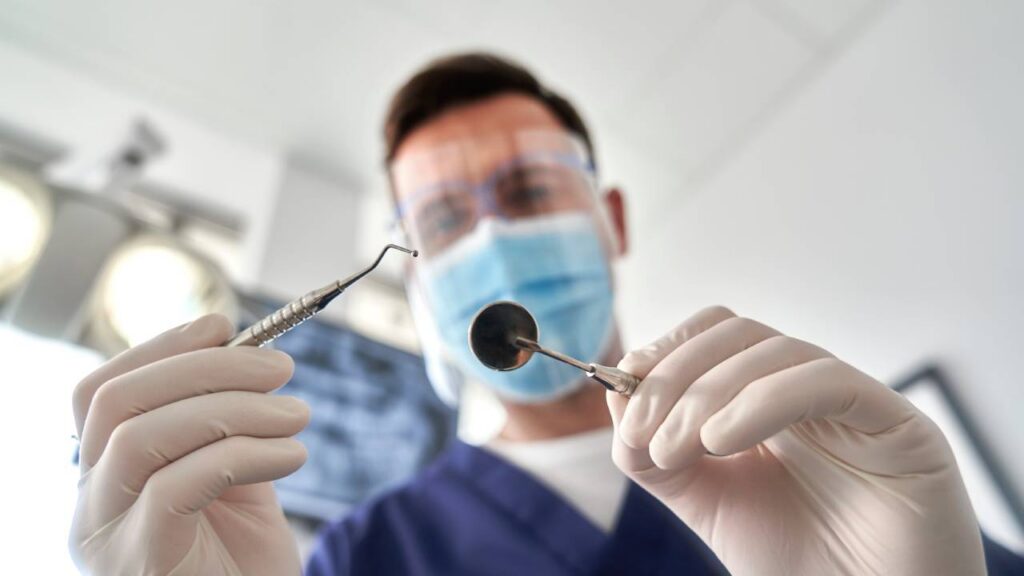
Nearly half of American adults over 30 have some form of periodontal disease, according to the CDC, and most of them had no idea it was developing. The early signs of gum disease are easy to dismiss or explain away, which is exactly why the condition advances so quietly. This article walks through what to watch for, why it matters, and what to do before the window for simple treatment closes.
What Is Gum Disease?
Gum disease, also called periodontal disease, is a bacterial infection of the tissues that hold your teeth in place. It starts at the gumline, where plaque builds up, hardens into tartar, and triggers a chronic inflammatory response that gradually destroys the gum tissue and bone supporting your teeth.
The disease moves through two main stages. Gingivitis is the early stage, characterized by inflammation and irritation of the gum tissue. At this point, no bone loss has occurred and the condition is fully reversible with professional treatment and improved home care. Periodontitis is the advanced stage, where the infection has spread below the gumline, pockets have formed between the teeth and gums, and the underlying bone has begun to deteriorate. Tooth loss becomes a real outcome at this stage, not a theoretical one.
The distinction matters because gingivitis and periodontitis are not treated the same way, and the further the disease progresses, the more the stages diverge in both severity and complexity.
Why Early Detection Changes Everything
A 2015 systematic review published in the Journal of Clinical Periodontology, analyzing data across more than 5,800 patients, confirmed that gingivitis is fully reversible with professional scaling and improved oral hygiene, with no residual bone damage when caught before periodontitis develops. That finding carries a clear implication: the damage that periodontitis causes, including bone loss, pocket formation, and eventual tooth mobility, does not have to happen. But it will happen if gingivitis goes untreated long enough.
The practical translation is straightforward. Right now, if your gum disease is in the gingivitis stage, a professional cleaning and a consistent home care routine are enough to resolve it completely. Six months from now, if it has progressed into early periodontitis, the treatment escalates to scaling and root planing, a deeper and more involved procedure. The window to act without major intervention is real, and it does close.
The Early Signs of Gum Disease You Need to Know
Most people who develop gum disease do not feel pain in the early stages. That is the most important thing to understand about this condition. The symptoms are subtle, they develop gradually, and they are easy to rationalize as normal. None of them are normal. Here is what to look for.
Gums That Bleed When You Brush or Floss
Bleeding gums are the most common early warning sign of gum disease, and they are not something healthy gum tissue does. A 2013 study published in the Journal of Dental Hygiene examining over 1,000 adult patients found that bleeding on probing was present in the vast majority of gingivitis cases, making it the single most reliable early clinical indicator of gum inflammation.
A common mistake is to respond to bleeding by flossing less, interpreting the blood as evidence that flossing is causing damage. The opposite is true. Bleeding means the tissue is already inflamed and infected, and reduced flossing allows more bacterial plaque to accumulate. If your gums bleed when you brush or floss, that is not a reason to stop, it is a reason to call the dentist.
Swollen, Red, or Tender Gums
Healthy gum tissue is pink, firm, and fits snugly around each tooth. Inflamed gum tissue looks different: it appears darker red or purplish, feels puffy or spongy to the touch, and may be tender when you press on it. The CDC attributes this inflammatory response to the body’s immune reaction to bacterial biofilm accumulating at and below the gumline. The bacteria are not just sitting there passively; they are triggering an immune response that, over time, damages the very tissue trying to fight them.
If your gums look swollen or feel sore, a periodontal screening is the appropriate next step, not a wait-and-see approach.
Persistent Bad Breath (Halitosis)
Chronic bad breath that returns within hours of brushing is a specific symptom with a specific cause. Anaerobic bacteria living below the gumline produce volatile sulfur compounds as a byproduct of their activity. These compounds are what create the persistent odor. A 2012 study in the Journal of Periodontology analyzing 245 patients found a statistically significant correlation between subgingival bacterial load and chronic halitosis, independent of tongue coating or salivary factors.
Mouthwash masks the odor temporarily but does not address the source. If your breath is a recurring problem despite consistent brushing, the bacteria responsible are most likely living under the gumline, not on the tongue.
Gum Recession and Teeth That Look Longer
Gum recession is the gradual pulling back of gum tissue from the tooth surface, exposing the root. Teeth that look longer than they used to, or that feel more sensitive near the base, are showing the visible signs of recession. A 2012 study in the Journal of Periodontology analyzing NHANES data found that 58% of adults over 30 had at least one site of gum recession, with prevalence increasing sharply with age.
Recession is not a cosmetic quirk. It exposes root surfaces that are not protected by enamel, creating structural vulnerability and pathways for sensitivity and decay. Understanding what actually drives gum recession matters if you want to stop it from progressing.
Tooth Sensitivity to Hot, Cold, or Sweet
Sensitivity that develops or worsens over time, particularly near the gumline, is directly connected to the root exposure that recession causes. The root surfaces contain thousands of tiny tubules leading to the nerve, and without the insulation of healthy gum tissue, temperature and sugar reach those nerves far more easily. A 2013 review in the Journal of Clinical Periodontology confirmed a strong association between periodontal recession and dentinal hypersensitivity across multiple patient populations.
A sensitivity toothpaste addresses the discomfort but does not treat the underlying recession. Sensitivity that has developed or noticeably changed in recent months warrants a professional evaluation, not just a change in toothpaste.
Loose Teeth or Changes in Bite
Tooth looseness is the point where gingivitis has crossed into periodontitis. When teeth feel mobile, shift in position, or when your bite feels different than it used to, it signals that the alveolar bone supporting the teeth has already begun to break down. NIDCR data indicates that progressive bone loss in periodontitis follows a predictable pattern: as pockets deepen and bacterial colonization extends below the bone crest, the structural support for affected teeth diminishes measurably.
Any perceived shift in tooth position or bite alignment is a same-week dental appointment. This is not a symptom to monitor.
What Causes Gum Disease to Develop
The primary cause is bacterial plaque. When plaque is not removed consistently, it mineralizes into tartar, which cannot be removed by brushing alone. The bacteria within this buildup trigger an immune response that, over time, damages the gum and bone tissue it was meant to protect. The CDC identifies poor oral hygiene as the foundational driver, but several factors accelerate the process significantly: smoking, dry mouth (whether from medications or other causes), uncontrolled diabetes, and genetic predisposition all amplify the inflammatory response and reduce the body’s ability to manage infection.
Who Faces the Highest Risk
Age is one of the strongest predictors. CDC surveillance data show that 70.1% of adults aged 65 and older have periodontal disease, compared to 38.5% of those aged 30 to 44. The accumulation of exposure time, combined with higher rates of medication use and systemic conditions, drives that gap.
Smokers face a particularly elevated risk. A 2015 meta-analysis in the Journal of Periodontology, reviewing data from 21 studies and over 17,000 patients, found that smokers were approximately three times more likely to develop severe periodontitis than non-smokers, and responded less favorably to treatment. The mechanism is direct: smoking impairs blood flow to the gum tissue and suppresses immune function locally.
Diabetes creates a bidirectional relationship with gum disease. A 2013 study in Diabetes Care confirmed that patients with poorly controlled type 2 diabetes had significantly higher rates of periodontal disease, and that successful periodontal treatment was associated with modest but measurable improvements in glycemic control. The relationship runs in both directions: gum disease makes blood sugar harder to manage, and high blood sugar makes gum disease harder to treat.
Hormonal changes in women (during pregnancy, menopause, and certain phases of the menstrual cycle), medications that cause dry mouth or gum overgrowth, and a family history of periodontitis all represent additional risk factors with documented clinical evidence. Knowing your risk profile tells you how aggressively to schedule preventive care.
The Link Between Gum Disease and Your Overall Health
Gum disease is not a mouth problem that stays in the mouth. A landmark 2019 study published in Atherosclerosis analyzing over 1,400 patients found that individuals with periodontitis had significantly higher markers of systemic inflammation and a meaningfully elevated risk of cardiovascular events. The mechanism is not abstract: chronic gum infection releases inflammatory cytokines and allows bacteria to enter the bloodstream directly, where they contribute to arterial inflammation and metabolic stress. For a deeper look at how periodontal inflammation affects the heart, the research is compelling and clinically relevant.
The diabetes connection reinforces the systemic picture. Gum disease is now considered a complication of diabetes by the American Diabetes Association, not simply a comorbidity. Treating it is part of managing the whole condition, not an optional add-on. Treating gum disease is about reducing chronic systemic inflammation, not just preserving teeth.
How Gum Disease Is Diagnosed
A periodontal screening involves three components: a visual exam of the gum tissue, pocket depth measurements using a periodontal probe at multiple sites around each tooth, and dental X-rays to assess bone levels. The NIDCR defines periodontal health by pocket depths of 1 to 3 millimeters; readings of 4 millimeters and above indicate inflammation, and readings of 5 millimeters or more typically indicate periodontitis with bone involvement.
One important clarification: a standard cleaning appointment does not automatically include a full periodontal assessment. If you recognize any of the signs described above, ask specifically for a periodontal screening during your exam. The probe, the charting, and the X-rays are what establish baseline data and determine whether disease is present.
Treatment Options Based on Stage
For gingivitis, the treatment is professional cleaning to remove plaque and tartar, combined with an improved home care routine. At this stage, the gum tissue heals fully and no permanent damage remains. For early to moderate periodontitis, scaling and root planing is the standard of care: a thorough cleaning that reaches below the gumline to remove bacterial deposits from root surfaces and smooth them to discourage reattachment. A 2015 Cochrane review analyzing data from 71 trials found that scaling and root planing produced statistically significant reductions in pocket depth and improvements in clinical attachment levels compared to no treatment. For advanced cases, surgical intervention may be necessary to access deep pockets or regenerate lost bone.
The pattern is consistent: earlier stage, less invasive treatment, lower cost, and faster recovery. For those considering non-surgical periodontal care, scaling and root planing is effective for most patients with mild to moderate disease.
How to Prevent Gum Disease From Starting or Returning
The evidence-based prevention protocol is not complicated. The American Dental Association recommends brushing twice daily with a soft-bristled brush, flossing once daily to disrupt interproximal plaque, and attending professional cleanings at intervals appropriate to your risk level. For most adults, that means every six months. For patients with a history of periodontitis, elevated systemic risk, or active recession, quarterly cleanings are often more appropriate.
A 2020 study in Clinical Oral Investigations, tracking 1,200 adults over three years, found that patients who maintained professional cleaning intervals of every six months or less had significantly lower rates of periodontal disease progression than those who attended annually or less frequently. Quitting smoking and managing diabetes are not optional additions to this protocol; they are part of it.
The most useful action is identifying the one habit in this list that is currently inconsistent and addressing it before the next cleaning.
The Next Step Is Simpler Than the Alternative
If you recognized one or more signs in this article, the right response is a periodontal screening, not a wait-and-see approach. The appointment takes less time than the treatment gum disease will eventually require if left alone. If you are in the gingivitis stage, reversal is entirely possible. Learning how to address early-stage disease at home can support that process, but it does not replace the professional assessment that tells you where you actually stand. Book the screening. That one step determines everything else.