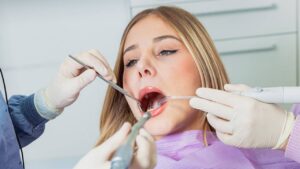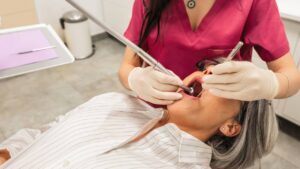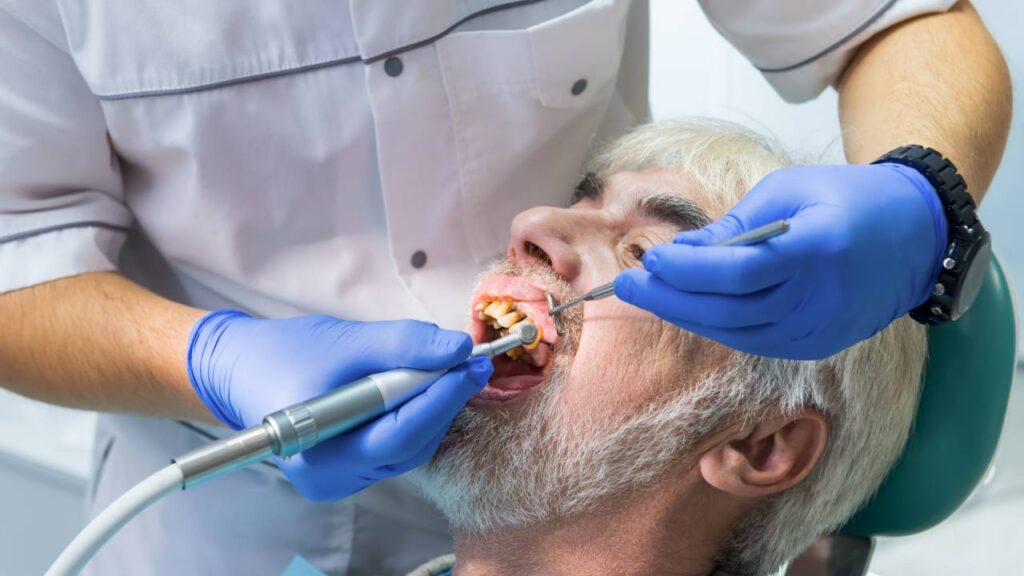
Most people assume gum disease treatment means surgery. That assumption keeps a lot of people from making an appointment, and it means a lot of treatable cases progress further than they need to. The reality is that nonsurgical gum disease treatment resolves the majority of cases when it starts early enough, and understanding how that process works puts you in a much stronger position to protect your teeth.
What Nonsurgical Treatment Can Actually Achieve
A 2022 systematic review published in the Journal of Clinical Periodontology, covering 72 randomized controlled trials and over 3,000 patients, found that scaling and root planing reduced average pocket depths by 1.29mm in moderate periodontitis cases and by 2.16mm in deep pockets. Those numbers translate directly to tissue reattachment, reduced bacterial load, and teeth that stay in your mouth longer. Surgery was not required for the majority of participants to achieve clinically meaningful outcomes.
The key insight from that body of research is this: surgery is not the automatic answer for most gum disease cases. Stage and severity determine the treatment path, not fear or avoidance. What successful nonsurgical treatment looks like in practice is pockets that shrink to manageable depths, bleeding that stops, and bone loss that stabilizes rather than progresses. That is a realistic outcome for most patients at Stages I through III when they start treatment and stay consistent with maintenance. Knowing where you stand on that spectrum is the first move.
How to Know Where You Stand: Staging Gum Disease
The American Academy of Periodontology and the European Federation of Periodontology released a new classification framework in 2017 that organizes periodontitis into four stages based on clinical and radiographic evidence. Stage I is mild disease with shallow pockets and minimal bone loss. Stage II is moderate disease with somewhat deeper pockets and up to one-third bone loss. Stage III involves severe bone loss, pockets of 6mm or deeper, and possible tooth mobility. Stage IV adds complexity, including masticatory dysfunction or extensive tooth loss that complicates the ability to rehabilitate the bite.
For treatment planning, the staging system matters because Stages I and II respond predictably well to nonsurgical care. Stage III often does too, provided the patient complies with the protocol and follows through on maintenance. Stage IV typically requires a periodontal specialist conversation before deciding on a treatment plan, because the complexity of those cases goes beyond what mechanical debridement alone can address. If you are unsure what stage applies to you based on early warning signs, the single most useful action you can take before your next appointment is to ask your provider for a full-mouth periodontal chart with probing depths recorded for every tooth.
The Numbers That Tell Your Story: Pocket Depth and Bone Loss
Pocket depth is measured in millimeters using a thin probe that slides below the gumline at six points around each tooth. Healthy tissue reads between 1 and 3mm. A reading of 4mm indicates borderline disease with active inflammation. Anything at 5mm or deeper indicates established periodontitis, and pockets of 6mm or more correlate strongly with bone loss.
A 2019 study in Periodontology 2000 analyzing data from over 10,000 patients found that initial probing depth was the single strongest predictor of treatment response. Pockets of 4 to 6mm responded best to nonsurgical intervention. Pockets above 7mm were significantly more likely to require surgical access for adequate debridement. What this means practically: your probing depths are not just numbers on a chart. They tell you whether mechanical cleaning from above the gumline can reach the problem, or whether a different approach is needed. Bone loss, visible on X-rays as a reduction in the height of the bone surrounding the tooth roots, adds a second dimension to that picture. Together, pocket depth and bone loss percentage give your provider the information needed to decide which path makes clinical sense for your case.
Bleeding on Probing: The Inflammation Marker Most Patients Ignore
Bleeding when a hygienist probes your gums is not simply a sign that you need to floss more. It is a real-time signal of active inflammation in the sulcular tissue. A 2020 study in the Journal of Periodontology, tracking 891 patients over three years, found that sites with persistent bleeding on probing (BOP) at consecutive appointments were 6.7 times more likely to show progressive bone loss than sites that resolved to non-bleeding.
The practical takeaway: track whether your gums bleed at consecutive appointments. A healthy response to treatment is BOP dropping below 10 to 15 percent of measured sites within 6 to 8 weeks of scaling and root planing. If bleeding continues at the same sites after treatment, that is a signal that healing is incomplete, not that the disease is simply slow to respond. Bring it up with your provider rather than assuming it will resolve on its own.
Scaling and Root Planing: The Cornerstone Treatment
Scaling and root planing (SRP) is the gold-standard nonsurgical intervention for periodontitis, and it has decades of evidence behind it. The 2015 Cochrane Review on SRP for periodontitis, one of the most cited summaries in the field, found that SRP reduced pocket depths by an average of 1.05mm compared to no treatment, with larger reductions in deeper pockets and consistently significant reductions in bleeding on probing across all severity levels.
The mechanism is straightforward. Calculus (hardened bacterial deposits) adheres to root surfaces below the gumline and creates a reservoir for the bacteria that drive gum disease. Scaling removes those deposits; root planing smooths the root surface so that bacteria and calculus have less surface texture to adhere to. The result is an environment where the gum tissue can reattach to the root and the inflammatory cycle breaks. Procedurally, you should expect local anesthetic for comfort, a quadrant-by-quadrant approach spread over two to four appointments, and some post-appointment sensitivity for 24 to 48 hours. For a detailed breakdown of what the appointment itself involves, understanding the full scope of a deep cleaning visit gives you a clear picture of what to prepare for.
What Happens at the Reevaluation Appointment
Six to eight weeks after completing SRP, a reevaluation appointment is scheduled to measure the clinical response. This is not a formality. It is the decision point that determines whether treatment worked, whether additional nonsurgical care is needed, or whether surgical consultation should enter the conversation.
A 2021 study in Clinical Oral Investigations, following 234 patients post-SRP, found that reevaluation outcomes at 8 weeks accurately predicted long-term maintenance success at 24 months in 79 percent of cases. The tissue response at that 6 to 8 week mark is the clearest window into how your case will progress. At this appointment, your provider re-probes every site, records BOP, and evaluates tissue tone. Pockets that have reduced, stopped bleeding, and show pink, firm tissue indicate successful healing. The single most important logistical step: schedule the reevaluation before you leave the SRP appointment. It is easy to let it slip, and doing so breaks the chain of clinical follow-through that determines whether the treatment holds.
When SRP Alone Is Enough
SRP is considered clinically successful when three benchmarks are met: pocket depths have reduced to 4mm or less at the majority of sites, BOP has fallen below 10 to 15 percent, and radiographic evidence shows no continued bone loss progression. When those markers are achieved, the literature consistently supports moving into maintenance rather than escalating to surgery.
A landmark longitudinal study by Lindhe and Nyman, following patients for five years post-SRP with regular maintenance, found that teeth with initial pockets up to 6mm maintained stable bone levels without surgical intervention when patients adhered to 3 to 4 month recall schedules. The plain-language takeaway from five decades of research in this direction is that SRP works, and what makes it last is not the procedure itself but the re-care appointments that follow it. Skipping maintenance after successful SRP is the fastest way to undo the result.
Adjunctive Antibiotics: When They Help and When They Don’t
Antibiotics are not a standalone treatment for gum disease. Bacterial biofilm in periodontal pockets is embedded in a matrix that systemic antibiotics penetrate poorly without mechanical disruption first. What the research supports is a more targeted role: antibiotics used in addition to SRP, not instead of it.
Locally delivered antibiotics are the more evidence-supported option for most cases. Minocycline microspheres (Arestin) and chlorhexidine chips are placed directly into periodontal pockets immediately after scaling. A 2018 randomized controlled trial published in the Journal of Periodontology, involving 207 patients, found that SRP plus locally delivered minocycline produced an additional 0.32mm pocket reduction and a significant reduction in BOP compared to SRP alone at 9-month follow-up. Those gains are modest but clinically meaningful at sites that resist mechanical treatment alone.
Systemic antibiotics (typically metronidazole and amoxicillin in combination) show stronger evidence in cases of aggressive periodontitis or where specific bacteria such as Aggregatibacter actinomycetemcomitans have been identified. At your SRP appointment, ask specifically whether adjunctive antibiotic therapy is appropriate for your case. The answer depends on your disease severity, bacterial profile if tested, and medical history.
Chlorhexidine Rinses and Their Actual Evidence Base
Chlorhexidine gluconate at 0.12 percent concentration is the most studied antiseptic rinse in dentistry. A 2017 Cochrane Review analyzing 51 studies on chlorhexidine use for gingivitis and early periodontitis found a 26 percent reduction in plaque scores and a 45 percent reduction in gingival bleeding compared to placebo rinse at 4 to 6 weeks. Those are real numbers. But the same review noted that evidence for long-term use beyond 6 weeks was inconsistent, and extended use brought documented downsides including brown staining of teeth and restorations, taste alteration, and a calculus-enhancing effect.
Chlorhexidine works as a short-term adjunct during active treatment phases. It does not replace mechanical removal of calculus and biofilm, and it is not designed for ongoing indefinite use. If prescribed, use it for the recommended course duration only, then confirm with your provider whether to continue.
Laser Therapy: What the Evidence Actually Supports
Laser-assisted periodontal therapy generates significant marketing attention, and the claims made for it often outpace the clinical evidence. A 2021 systematic review and meta-analysis in Lasers in Medical Science, covering 22 randomized controlled trials, found that laser adjuncts to SRP produced a statistically significant additional pocket reduction of 0.33mm compared to SRP alone. That is a real benefit. It is also a modest one, and it did not reach the threshold of clinical significance (typically defined as 0.5mm or greater in periodontal research) in the majority of included studies.
What lasers do well: bacterial decontamination of the pocket environment, reduction of post-procedural discomfort, and in some protocols, biostimulation of tissue healing. What they cannot do is replace mechanical debridement. The calculus that drives disease is a calcified deposit on root surfaces. No current laser system removes calculus mechanically. If a provider presents laser therapy as the primary treatment rather than an adjunct to thorough scaling and root planing, ask specifically what mechanical debridement protocol accompanies it. Laser therapy added to excellent mechanical care is a reasonable approach; laser therapy offered as a substitute for it is not supported by the evidence.
The Role of Your Home Care in Treatment Success
A 2019 study in the Journal of Clinical Periodontology, following 562 patients for two years after SRP, found that patients who maintained adequate home care (plaque index below 20 percent) retained an additional 0.4mm of pocket depth reduction compared to patients with inconsistent home care. Professional treatment creates the biological conditions for healing. Home care defends those conditions every day between appointments.
The connection is mechanical and direct. Bacterial plaque reforms on tooth surfaces within hours of being removed. Without daily disruption of that biofilm at the gumline, the inflammatory cycle that SRP interrupted simply restarts. Your provider’s work is the reset; your daily habits determine whether the reset holds.
Brushing Technique: The Modified Bass Method
The Modified Bass technique is the most evidence-supported brushing method for patients with periodontal disease. A 2020 clinical comparison in the International Journal of Dental Hygiene found it significantly more effective than horizontal scrubbing at reducing gingival bleeding scores in patients with early periodontitis, precisely because it accesses the sulcus (the space between tooth and gum) rather than just the visible tooth surface.
The technique: place the bristles at a 45-degree angle to the gumline, aimed toward where the tooth meets the tissue. Use small circular or vibratory strokes, moving the brush slowly along the gumline rather than scrubbing across it. Spend at least 30 seconds per quadrant focused at the gumline, not just on the enamel above it. Electric toothbrushes with oscillating heads reliably produce better plaque removal than manual brushing in most population studies, but technique with either type matters more than the tool.
Interdental Cleaning: Floss, Picks, and Water Flossers Compared
For patients with periodontal disease and pockets of 4mm or greater, the evidence tilts clearly toward interdental brushes and water flossers over traditional string floss. A 2019 study in the Journal of Periodontology comparing the three methods in patients with established periodontitis found that interdental brushes reduced interdental plaque by 51 percent versus 27 percent for floss, and that water flosser use reduced BOP by 50 percent versus 22 percent for floss after a 4-week trial.
The mechanism explains the result. String floss works in tight, healthy contacts where the papilla fills the space between teeth. In patients with periodontitis, bone loss creates open embrasure spaces and irregular root surfaces. Interdental brushes can navigate those spaces and contact root surfaces that floss cannot reach. For pockets at 4mm or deeper, use an interdental brush sized to fit the embrasure without forcing, and supplement with a water flosser if compliance with brushing is already consistent.
Tobacco Use and Treatment Outcomes
Tobacco is the single most modifiable risk factor affecting SRP outcomes, and the effect size is large. A 2015 systematic review in the Journal of Clinical Periodontology, pooling data from 14 longitudinal studies, found that current smokers showed 50 to 60 percent less pocket depth reduction from SRP compared to non-smokers at 6-month follow-up. The mechanism is primarily vascular: smoking reduces blood flow to gingival tissue, blunting the inflammatory response that drives healing after mechanical debridement.
Smokeless tobacco and vaping show similar effects on periodontal outcomes in more recent research. A 2022 study in Tobacco Induced Diseases, examining 312 periodontal patients over 12 months, found that e-cigarette users showed significantly worse pocket depth maintenance than non-users even after adjusting for initial disease severity. If tobacco use of any kind is active, disclose it to your provider before treatment begins so the protocol, re-evaluation intervals, and maintenance frequency can be adjusted to reflect the higher-risk profile.
Nutrition, Inflammation, and Gum Disease
A 2021 study in the Journal of Clinical Periodontology, examining dietary patterns in 522 adults with moderate periodontitis, found that patients in the highest quartile of dietary inflammatory index scores had 37 percent greater bone loss progression over 36 months than patients in the lowest quartile. The mechanism is not simply about sugar and bacteria. Systemic inflammation driven by diet affects the immune response in gum tissue directly, making the tissue more reactive to the bacterial challenge already present.
Omega-3 fatty acid intake shows a specific protective effect in this pathway. A randomized trial published in the Journal of the American Dietetic Association found that patients supplementing with omega-3s alongside SRP showed significantly greater reductions in clinical attachment loss than the SRP-only group at 6 months. The one dietary shift with the most direct evidence behind it for periodontal patients: reduce ultra-processed food intake and increase oily fish, walnuts, or a high-quality fish oil supplement. That shift reduces the systemic inflammatory burden that makes gum tissue harder to heal.
How Diabetes and Other Systemic Conditions Affect Treatment
The relationship between diabetes and periodontal disease is bidirectional, and the evidence for this is among the strongest in dental medicine. Grossi and Genco’s foundational research, later supported by multiple randomized controlled trials, established that uncontrolled diabetes impairs the healing response in gum tissue and accelerates bone loss. More actionably, a 2018 meta-analysis published in Diabetes Care, pooling data from 35 RCTs, found that treating periodontitis reduced HbA1c by an average of 0.29 percent. In the context of blood sugar management, that is a clinically meaningful reduction achieved through dental care.
Cardiovascular disease and periodontal disease share inflammatory pathways. A 2020 systematic review in the European Heart Journal found consistent associations between periodontitis and coronary artery disease, with the relationship strongest in patients with severe or poorly controlled gum disease. If you want to understand how these two conditions connect mechanically, the evidence base is worth reviewing before your appointment.
For patients managing Type 2 diabetes, the relationship between blood sugar control and periodontal outcomes is a two-way street worth discussing with both your medical provider and your dentist. Bring a current medication list and your most recent HbA1c or bloodwork results to any periodontal evaluation so that the provider can calibrate treatment timing and expectations to your current metabolic status.
Maintenance: The Phase That Determines Whether Treatment Lasts
Axelsson and Lindhe’s 30-year longitudinal study, one of the most cited in all of periodontal research, compared patients receiving regular periodontal maintenance every 2 to 3 months against those on a once-a-year recall schedule. At 30 years, the maintenance group had lost an average of 0.4 teeth per person. The infrequent-recall group had lost an average of 7.1 teeth per person. The difference was not the quality of the initial treatment. It was the maintenance frequency.
Periodontal maintenance at 3 to 4 month intervals gives your provider the opportunity to disrupt bacterial recolonization before it reestablishes at disease-causing levels. Once-a-year cleanings allow biofilm months to mature into organized pathogenic communities in the same pockets that SRP cleared. If you are currently on an annual recall schedule and have a history of gum disease, ask your provider at the next visit to move to 3-month periodontal maintenance intervals.
What Periodontal Maintenance Includes (and Why It’s Different from a Cleaning)
Periodontal maintenance (billing code D4910) and a standard prophylaxis (D1110) are not the same procedure, and the distinction matters both clinically and for your insurance. A prophylaxis is designed for patients with healthy gums and no bone loss history. Periodontal maintenance is designed for patients who have been treated for periodontitis and are in the stabilization phase.
At a periodontal maintenance appointment, your provider re-probes all sites to track pocket depth changes, performs site-specific debridement in areas showing active disease or inflammation, tracks BOP across the whole mouth, and compares findings to your previous visit. The clinical goal is monitoring and early intervention, not a routine polish. When scheduling, verify with the front desk that the visit is coded as D4910 periodontal maintenance rather than D1110 prophylaxis. The clinical depth of the appointment is different, and the billing code reflects that difference accurately for insurance purposes.
When Nonsurgical Treatment Isn’t Enough
The clinical indicators that move a case toward surgical consideration are specific, not vague. According to the 2018 AAP Clinical Practice Guidelines for periodontitis, surgery is indicated when pocket depths remain at 6mm or greater following completed SRP and reevaluation, when furcation involvement (where bone loss has progressed to the area where tooth roots divide) reaches Grade II or III, when vertical bone defects are present that create pockets inaccessible through supragingival instruments, or when persistent BOP continues at multiple sites despite compliant maintenance.
These findings represent information, not failure. Some cases reach a point where surgical access is the only way to physically reach the root surfaces and bone defects driving continued disease. Without surgical intervention at that threshold, the alternative is progressive tooth loss. A 2019 study in the Journal of Periodontology found that patients referred for surgical consultation after failed nonsurgical treatment retained significantly more teeth at 5-year follow-up than patients who continued nonsurgical care past its effective range. If your reevaluation shows these markers, ask for a referral to a periodontist for a surgical consultation. That referral is the path that preserves teeth, not a sign that prior treatment failed.
What to Try This Week
Schedule a periodontal evaluation and ask specifically for a full-mouth probing chart with pocket depths recorded at six sites per tooth. That chart is the diagnostic baseline that determines everything else: whether you have gingivitis or periodontitis, how far along the disease process has advanced, which treatment path fits your case, and what the measurable benchmarks for success look like. Without it, any conversation about gum disease treatment is happening without the data that makes it meaningful. One appointment, one chart, one clear picture of where you stand. That is the move that makes everything else in this guide actionable.