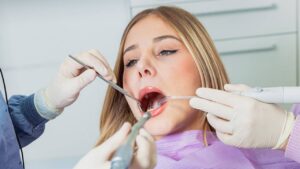
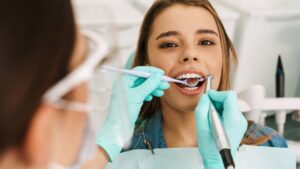
Understanding full mouth restoration
When you’re facing extensive tooth loss or severe dental damage, full mouth implant restoration offers a comprehensive solution to rebuild your smile from the roots up. Full mouth implant restoration rebuilds or replaces all of your teeth to improve oral health, function, and aesthetics by combining advanced restorative science with cosmetic considerations [1]. Whether you’ve suffered from decay, fractured teeth, or congenital conditions like Amelogenesis Imperfecta, this approach can give you back the confidence to eat, speak, and smile without hesitation.
In a typical restoration, your dentist or prosthodontist will replace missing or failing teeth with titanium implants embedded in the jawbone, then attach a fixed prosthesis that looks and performs like natural teeth. This procedure not only restores chewing efficiency but also helps preserve your jawbone, preventing the bone loss that comes with long-term tooth absence [2]. By choosing implants over removable dentures, you benefit from a stable foundation that integrates directly with your bone, replicating the crown-to-root connection of real teeth.
This guide walks you through the benefits, candidacy requirements, treatment planning, surgical procedure, sedation options, cost considerations, and post-care essentials so that you can make informed choices on your journey to a confident, fully restored smile.
Benefits of full mouth implants
Full mouth implants deliver advantages far beyond what traditional dentures can offer. First, they preserve the underlying jawbone by stimulating bone growth where natural teeth once stood. This stimulation prevents facial collapse and maintains the contours of your cheeks and lips, contributing to a more youthful appearance [2].
You’ll also notice a dramatic boost in chewing efficiency. Fixed implant bridges or implant-supported bridges allow you to bite and chew with up to 90–95 percent of your natural bite strength, making it easier to enjoy a diverse diet without the slipping or clicking associated with dentures [3]. Speech clarity improves too, since you’re not compensating for a loose plate in your mouth.
Durability is another key benefit. With proper care, titanium implants can last 25 years or more, while the prosthetic bridge typically lasts 10 to 20 years depending on material and maintenance [3]. This longevity often makes full mouth implant restoration the most cost-effective option over a patient’s lifetime.
Finally, the aesthetic outcome rivals natural dentition. Your dental team customizes the shape, size, and shade of each tooth to harmonize with your facial features and personal preferences, giving you a smile that looks genuinely yours.
Determining candidacy for implants
Not everyone is an ideal candidate for full mouth implant restoration, but many people who believe they don’t qualify can become candidates after preliminary treatments. Your suitability depends on factors such as jawbone density, overall health, and oral hygiene habits.
Sufficient bone volume is critical because implants require a solid foundation to fuse with your jaw through osseointegration. If you’ve experienced bone loss from missing teeth or gum disease, a bone graft or sinus lift may be necessary before implant placement. You can explore these preparatory procedures at a specialized bone graft & sinus lift Myrtle Beach clinic.
Good general health also matters. Chronic conditions like uncontrolled diabetes or osteoporosis can affect healing, so your dentist will review your medical history carefully. You’ll want realistic expectations about the timeline and possible need for multiple surgeries, especially if you’re considering advanced protocols like All-on-4 or All-on-6. Talking with an implant specialist Myrtle Beach ensures you get a candid assessment of your case and a clear roadmap toward restoration.
Lastly, maintaining excellent oral hygiene and attending follow-up visits are nonnegotiable. Your implants succeed when you commit to brushing, flossing, and professional cleanings as diligently as you would natural teeth.
Planning your treatment journey
Before any surgery, you’ll undergo a thorough consultation to map out the sequence of treatments needed for your full mouth implant restoration. Expectations, timelines, and cost estimates will be discussed in detail.
Initial consultation and assessment
At your first appointment, your dentist or prosthodontist will conduct a comprehensive oral exam. Digital X-rays and 3D cone-beam CT scans reveal the state of your jawbone, sinuses, and remaining teeth. These images guide decisions about extraction requirements and implant positioning. If you have deeply decayed or broken teeth, you may need an extraction & implant combination approach to remove nonviable teeth and place implants in the same session.
Imaging and bone evaluation
Once imaging confirms bone quality, your treatment plan will specify whether you need bone augmentation. Sinus lifts, ridge expansions, and grafts are common techniques to create the volume required for stable implants. Skilled surgeons at an implant surgery clinic can often perform these procedures under local anesthesia with minimal discomfort.
You’ll receive a timeline that outlines healing periods—typically three to six months for grafts to integrate—before moving on to implant placement. Clear communication ensures you’re never caught off-guard by additional steps.
Addressing oral health issues
Oral infections such as periodontal disease or untreated cavities must be resolved before moving forward. Your dentist may collaborate with a periodontist to treat gum disease, ensuring a healthy environment for implants. If you require wisdom tooth removal to clear space or address infection, a wisdom tooth removal Surfside specialist can handle that procedure safely and efficiently.
With a stable, infection-free foundation, you’re ready for the next phase: placing your implants.
Full mouth implant procedure
Your full mouth implant procedure typically unfolds in stages. Understanding each step helps alleviate uncertainty and keeps you informed about what to expect.
Placing titanium posts
During surgery, your dentist embeds titanium posts into the jawbone at predetermined sites. These posts act as roots for your new teeth. The number and distribution of implants depend on the chosen protocol—All-on-4, All-on-6, or individual implants per missing tooth.
Many practices, including all-on-4 implant system SC, use computer-guided templates to ensure precise placement. This technology minimizes surgical time and optimizes implant positioning for ideal load distribution.
Allowing osseointegration
After implant placement, you enter the osseointegration phase. During this period, bone cells grow around the titanium posts, anchoring them securely in your jaw. Healing typically takes three to six months, during which you might wear a temporary bridge or denture for function and aesthetics.
Attaching abutments and prosthesis
Once osseointegration is confirmed, small connectors called abutments are affixed to each implant. Your dental laboratory then fabricates a custom prosthesis—either a fixed bridge or individual crowns—that snaps or screws onto the abutments. The final result is a seamless set of teeth that look and feel natural.
| Option | Implants per arch | Bone graft needed | Healing time | Cost |
|---|---|---|---|---|
| All-on-4 | 4 | Rare | 4–6 months | $15,000–$30,000 per arch [4] |
| All-on-6 | 6 | Sometimes | 6–8 months | $20,000–$35,000 per arch |
| Traditional | 10–14 | Often | 6–9 months | $3,000–$5,000 per tooth [5] |
This table highlights the most common full mouth implant options, helping you weigh factors like treatment time, grafting needs, and investment.
Sedation options for comfort
Feeling anxious about oral surgery is normal, but modern sedation techniques let you relax or sleep through the procedure. Your dental team will recommend an option based on your level of anxiety, medical history, and procedural complexity.
- Nitrous oxide provides minimal sedation, helping you feel calm and comfortable. Learn more about inhalation approaches at sleep dentistry and sedation.
- Oral conscious sedation uses a prescribed pill taken before your appointment to induce deeper relaxation. This option suits patients with moderate anxiety; discuss it with a sedation for anxious patients dentist.
- IV sedation offers precise control over sedation depth and is ideal for longer surgeries. Many practices offer this service under the name IV sedation dental SC.
- General anesthesia places you in a fully unconscious state and is reserved for highly complex cases or patients with extreme anxiety. Your provider may refer you to a sedation dental procedure Myrtle Beach specialist.
Whichever method you choose, sedation safeguards your comfort so you can focus on recovery rather than the process itself.
Cost considerations and financing
The total investment for full mouth implant restoration in the United States typically ranges from $30,000 to $100,000, heavily influenced by the number of implants, bone grafting needs, and prosthetic materials [5]. Location also plays a role—treatment in metropolitan areas may carry higher fees than in smaller markets.
Insurance coverage varies widely. Some plans will cover 50 to 80 percent of medically necessary procedures, though cosmetic components are often excluded. Be sure to review your benefits or consult your insurer for pre-authorization.
Financing options make treatment more accessible. Many practices offer in-office payment plans, and third-party lenders like CareCredit provide promotional financing. You might also consider using a Health Savings Account (HSA) or Flexible Spending Account (FSA) to apply pre-tax dollars toward your care.
By breaking the cost into manageable monthly payments, you can move forward with confidence, knowing your investment yields years of function and a radiant smile.
Post-implant care and maintenance
Maintaining your full mouth implants requires the same dedication you would give natural teeth, with a few additional considerations.
Brush gently but thoroughly twice a day using a low-abrasion toothpaste. A soft-bristled brush or a powered toothbrush can help remove plaque around implants without damaging hardware. Floss once daily, using specialized implant floss or interdental brushes to clean between implant posts and under the prosthetic bridge.
Regular professional checkups are essential. Your dentist will examine implant stability, assess gum health, and take periodic X-rays to confirm bone support. If you notice any unusual symptoms—such as persistent soreness, swelling, or changes in bite—contact your provider promptly.
A plaque-control routine combined with quarterly or biannual hygiene visits ensures you maximize the lifespan of your restoration. For maintenance services near you, ask about implant restoration SC.
With careful home care and professional oversight, your full mouth implant restoration can serve you for decades, preserving both health and confidence.
Conclusion
Full mouth implant restoration represents the pinnacle of dental reconstruction, offering a permanent, stable, and natural-looking solution for extensive tooth loss. By understanding the benefits, candidacy criteria, treatment stages, sedation options, financial considerations, and maintenance requirements, you empower yourself to make decisions that align with your lifestyle and goals. Consult with a qualified team—whether it’s at an implant dentist in Surfside Beach or a specialized oral surgeon—to embark on your path toward a confident, fully restored smile.